
Change Everything No 91: Reflections on our vulnerability as human animals
The UK's government and institutions are frighteningly complacent about biosecurity threats

© Natalie Bennett (Gel plate print)
Book news
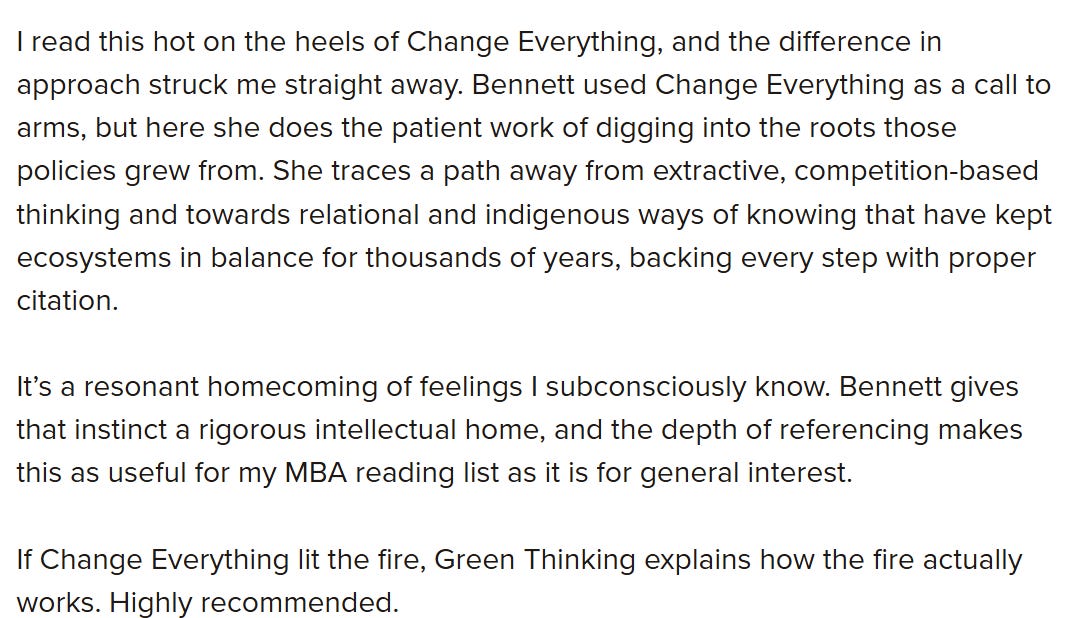
Had a lovely discussion about my book Green Thinking on The Educated Guess podcast with Dr Dan O’Hare and Dr Cora Sargeant. As you might expect from two educational psychologists, they were particularly interested in my (very critical) take on Maslow’s hierarchy of needs, which really, as I set out in the book and podcast, based on the flimsiest of foundations, yet still running rampant in rightwing thinking and the self-help world.
And thanks Claudia Waller for this lovely review on Goodreads covering both Green Thinking and Change Everything!

Humans v microbes: a long story
Some 5,000 years ago, Europe saw a period known as the “Neolithic decline”, when populations of humans collapsed. When they recovered hundreds of years later, genetics now tells us, the population was from entirely different stock. Genetics also tells us that in the older population – in which otherwise apparently healthy younger people are represented in far larger numbers than average -- there were infections of Yersinia pestis, the bacteria behind the Black Death, and Borrelia recurrentis, which causes the serious louse-borne relapsing fever.
As historian Peter Frankopan reminds us in his brilliant world history The Earth Transformed great changes in human societies – including collapses – are seldom unicausal, or unidirectional. Some societies survive a shock due to their deliberate or accidental choices of resilience and stability, others go under, some recover, some do not. But there is no doubt that until the 19th-century Global North expansion of public health measures, combined with the 20th-century development of antibiotics and a limited quantity of anti-fungal drugs, as well as better systemic treatment, that all societies were vulnerable to bacteria, viruses and fungi that could overwhelm individual and communal systems of immunity, cutting a swathe through societies, overturning great empires or humble villages alike. Authors in the great Roman capital of Constantinople in what we call the Justinianic Plague (Y. pestis again) “describe the plague killing upwards of ten thousand victims a day, in a city with a population of perhaps half a million … roughly half of whom may have been wiped out before the first onslaught … abated”.
There were probably people venturing out of their houses then saying, as an Italian photojournalist did as her country went into lockdown in 2020 at the start of the Covid pandemic, “Let’s go and see what the end of the world looks like.” In our times there was, for a brief period in 2020 and 2021, a real sense of shock, an understanding that we remain, for all of our technology and knowledge, vulnerable to apparently simple microscopic organisms and agents, as our ancestors were before us. But then, mRNA vaccines in particularly were invented and widely used (at least in the Global North), and for the general public at least, but also the political establishment and some of the policy world, a lesson was learnt that while there might be some frightening times, “modern medicine” will win through, technology will find a solution.
That is not, however, the reality of the 21st century. While stock price-boosting Silicon Valley Tech Bros and their friends claim that popping pills, chugging supplements and indulging in dubious treatments such as hyperbaric chambers will solve any microbial challenge, indeed conquer mortality itself, the experts that in the House of Lords I encounter regularly are fearful. Microbes have been around for about four billion years, and the fact that we have only just discover the way they can collectively behave in highly sophisticated ways (such as in biofilms) only reflects the level of 20th-century scientific ignorance.
The dangers
(a) Emergent natural diseases
The World Health Organisation, and others, have been seeking to popularise the understanding that “Disease X” is the next threat – an unknown disease whose nature should not be guessed at. It might seem that an influenza virus is the top candidate (pandemic preparations pre-Covid having almost entirely focused on it and with highly-pathogenic avian influenza continuing to rage not just in wild avian and mammalian species but also dairy cows and some humans that version, and many others, including those found in pigs, remain a serious concern). But the SARS-CoV-2 virus delivered a reminder that there are many potential disease threats, particularly as humans encroach increasingly into previously relatively isolated disease reservoirs, the likely source of the pandemic virus. Covid also helped to rewrite the rulebook of how zoonoses spread into humans, the previous theory that they needed a period of “pre-evolution” before they spread into humans being overturned. As recent large-scale analysis has shown: “Rather than requiring rare, finely tuned adaptations in animals, many viruses may already possess the basic capacity to infect and transmit between humans. What matters most is human exposure to a diverse array of animal viruses.”
But it is worth stressing that Covid was not “the big one”, the civilisation-killing disease of Emily St. John Mandel’s brilliant novel Station Eleven. It primarily killed older and already vulnerable people, and while it has left a huge trail of long Covid, the prevalence of which has helped raise the issue of the broader problem of post-viral chronic diseases, it was less infectious than diseases such as measles if comparable to active, untreated tuberculosis.
The post-World War I influenza pandemic (misnamed the Spanish flu) offers some clues to what a global system-threatening Disease X might look like. It killed 50 million people (the war itself killed an estimated 16 million), infected one fifth of the global population, and saw average US life-expectancy fall 12 years in a year. The “big one” would, like the Spanish flu, would likely kill particularly the relatively young and fit. It was a disease affecting those from their 20s to 40s – a key part of the workforce. That would be particularly threatening, as individuals understandably decided to privilege their own survival over social good, even though post-WWI there were many tales of heroism and self-sacrifice. Miss Condell, a nursing student in Boston, reported: “The self control, the endurance, and the splendid willing spirit of all the nurses were marvelous.”
Most human pandemics, like Covid, are zoonoses, diseases spread from animals. That makes the still-expanding level of factory farming, where large numbers of animals are kept in extremely concentrated conditions, a cause for great concern. Of which there is some acknowledgement, in the form of the establishment of the AMR in Agrifood Systems Transdisciplinary Network network and the some limited animal welfare reforms. But the public health threat from factory farming – particularly as a source for new influenza viruses – remains acute. (Anomaly, 2014)
(b) Resistant diseases
In many recent centuries, fear of “the clap”, gonorrhoea, affected the most intimate of human relationships. When the famous libertine and writer John Wilmot, Earl of Rochester, wrote “I send for my Whore, when for fear of a Clap, I spend in her hand” he was only accounting for a fear that extended far beyond his court lifestyle. With the rise of multi-drug resistant gonorrhoea, human relationships are again being marked by a similar fear. When the Ineos Oxford Institute conducted the Not In Our Lifetime campaign to raise awareness of antimicrobial resistance, in a Shoreditch nightclub it summoned social media influencers and journalists with the suggestion that sex might end by 2040 as a result. It claimed to have almost doubled awareness of AMR among 18-29-year-olds.
Far more pervasive – and a rightful cause of fear – is multidrug-resistant tuberculosis, which is “estimated to cause 13% of all antimicrobial resistance-attributable deaths worldwide and is driven by both ongoing resistance acquisition and person-to-person transmission”. Aid agencies rightly tell positive stories about how persistent attempts to identify patients, ensuring they get the right treatment, and stay on the treatment – one case study reports on two aged five and four being treated at an MSF clinic in Gujranwala, Pakistan, facing a nine-month course of treatment, which must not be interrupted. That one case study – in 2024 there were estimated to be 10.4 million new infections – helps demonstrate the difficulties of finding patients and ensuring they comply with the usually long courses of treatment, with great risks of AMR is treatment is only partial.
Most attention is on bacteria, but fungal diseases are some of the areas of fear about which a number of experts this author has encountered have the greatest concern. During the height of the Covid pandemic in India, the explosion of cases of mucormycosis, a fungal infection that can cause the skin to turn black and has a fatality rate of up to 50% remains something of a mystery, even if some limited understanding of the mechanisms enabling the commonly occurring Mucormycetes fungus to infect vulnerable patients is emerging. The HBO 2022 drama The Last of Us, adapted from a hit video game, in which rising temperatures allow the spread into humans of the real‑life Ophiocordyceps unilateralis, often called cordyceps or zombie‑ant fungus, was fiction, and not biologically realistic, but the existence of widespread resistance in Apsergillus fumigatus is keeping many doctors awake at night. (CDC, 2024)
C. Accidentally created diseases
“Synthetic biology” is the creation of new organisms or organic structures that do not exist in nature. Its boosters suggest that “advances in AI and DNA synthesis are pushing biology toward an engineering paradigm—one in which scientists can generate new genetic sequences and eventually build organisms to order”. (Strickland, 2026) They are treating DNA as “predictive engineering material” (ibid) But that is embedded in an outdated idea of genic supremacy, an often repeated phrase being that the genome operates like a machine blueprint, something that our growing understanding of the sophistication of living beings (even apparently simple microbes) is making it obvious is a claim of great 20th-century hubris. As former Nature editor Phillip Ball wrote in 2023, with exasperation: “looking to the genome for an account of how life works is rather like … looking to a dictionary to understand how literature works” We are messing with systems that we barely understand.
Most efforts to build “new life” will not start with basic amino acids, but rather synthetic nucleic acids—custom-made strands of DNA and RNA – that can be bought at present from suppliers without statutory controls, relying only on voluntary action. An important and practical step in preventing accidental (or deliberate) engineering of organism of potentially enormous threat is to ensure that suppliers are obligated to screen all sales, considering both the nature of the order and the bona fides of the customer.
There are also growing concern about the creation of “mirror” organisms, “ self-replicating organisms composed of non-natural-chirality biomacromolecules” (molecules the reverse shape to what occurs naturally) could be synthesised in officially condoned, or non-condoned, experiments, and on escape would have no natural controls. One study (in pre-print) showed that most of our antibiotics would fail to bind to “mirror” bacteria. (Concern about the dangers of “engineering” mirror organisms – and potential controls on such research – are the subject of continuing international debate.
While, as will be discussed below, the government speaks of engineering biology as an area of great potential, it is clear that there are significant risks of generating (or re-generating, something to which researchers have come close with smallpox – dangerous organisms.
(d) Deliberately created and spread diseases
In 1346 during a battle for the port of Caffa on the Crimean Sea, Mongol-Tartar forces reportedly catapulted plague victims into the city to spread the disease. It is commonly cited as the first use of biological weapons, although it reflects something that must have occurred earlier in human history. As part of the general push to establish international norms after the Second World War, the Biological and Toxin Weapons Convention (BWC) was established in 1972, in a world in which human capabilities to do produce harmful organisms was far less developed than today.
While 183 states are party to the convention, which categorically bans the development and production of biological weapons, including bacteria, viruses, fungi, prions and rickettsiae, a significant number of states have been alleged to have violated the treaty. Non-state actors have also sought to use biological weapons even before the recent decades of technological development: Al-Qaeda made unsuccessful attempts to develop biological weapons and the Rajneeshee cult used Salmonella to cause many hundreds of cases of food poisoning in Oregon in 1984. That the concerns about private activities discussed above is of growing urgency is demonstrated by the recent discovery of thousands of vials of suspicious materials, some labelled as pathogenic bioagents, and laboratory equipment, in a private home in Reedley, California.
Perhaps the greatest protection from the development, and certainly use outside the laboratory of infectious agents comes from the obvious risk of spread being uncontainable. But that may not influence many non-state, and possibly in extremis some state, actors. There is general agreement that, as one author put it, there is a “clear and present need for a revised, robust, and operationally relevant iteration (and interpretation) of the BWC that explicitly addresses these emergent risks and threats”.
(e) Other stresses multiplying the impact of diseases
As a leading article in the medical journal The Lancet said at the start of this year, “Peace is not adjacent to health—it is foundational.” That was written of course in the context of multiple both entrenched and new lighted conflicts around the world and more since that was penned. From the poor citizens of Caffa in 1346 to the post-WWI influenza pandemic, war and disease have always come together. But beyond the obvious impacts of injured, starved and traumatised people being more vulnerable, there has grown increasing understanding of the links between AMR and war.
Recent wars have seen Acinetobacter baumannii emerge as a major driver of hospital-acquired infections, first multi-drug resistant, then extensively-drug resistant, and pan-drug resistant. Only in the past few years has the understanding developed that the effects of the weapons themselves, in the form of heavy metal contamination is a driver of such resistance in its own right.
The climate emergency (increasingly also seen as a health emergency), the threat of biological collapse, and the weakening of human bodies through exposure to a rising cocktail of novel entities, from the so-called forever chemicals (PFAS), on which a House of Commons Select Committee has just expressed grave concern to pesticides, pharmaceutical residues and micro and nano-plastics that together form a “chemical cocktail have the potential to also open the way to the spread and greater impact of infective agents.
3. Countermeasures: capacity and incapacity
(a) Identifying risks and threats
Identifying risks and threats is clearly the starting point for countermeasures. The UK Microbial Forensics Consortium (UKMFC) was established on a One Health framework in 2023, linking frontline biosurvellience laboratories from the clinical, veterinary, plant, food and aquaculture sectors across the four nations of the UK incorporating genomics and bioinformatics - the generation of genetic information from samples and the use of computational tools - to interpret this information as a core UK strength. In this, the UK has a rare genuine argument for being at the forefront of global efforts, but in some of the areas of highest risk there are serious concerns about continuing capacity and the risk of collapse of existing capacity with ageing facilities, notably the high-containment laboratories in Porton Down in Wiltshire, and Colindale in north London. In a case study that might be taken as an exemplar for the weaknesses of the British state, more than £400 million has been spent to no effect, and the predicted cost of the project has ballooned to £3.2bn, more than 500% higher than the initial estimate.
At the core of domestic attempts to reduce and prevent AMR are antimicrobial stewardship schemes (AMS) in the medical and veterinary fields. This is an area in which the UK is genuinely seen as globally leading, but also affected by institutional limitations. As one author noted reflecting on another House of Commons Select Committee study, “AMS programmes built for stable conditions cannot survive disruption, whether from pandemics, workforce shortages, or estate failures … the normal operating environment of the NHS.”
(b) Political risks
As we saw during the height of the Covid pandemic, with perhaps the now most infamous example being the “eat out to help out” scheme, political leaders are subject to multiple pressures, of which public health is only one. With the dominance of the Treasury in UK political structures continuing over decades, guided by an ideology that understands only money, not physical and biological reality, the Green Book model of judging government spending does not have an effective formula for judging or dealing with biosecurity risks. It assumes society continuing much as it is now.
Public fear, and public resistance to necessary action – whether vaccination or quarantining – is also a political risk. Which is nothing new. As a contemporary academic reflecting on the 1918-20 influenza pandemic noted: “Though willing to accept public health officials’ guidance in the early weeks of the crisis, as weeks and months passed and these officials proved unable to contain influenza, Americans grew restive under their control.”
(c) Social weakness
UK society is marked by poor levels of public health, with healthy life expectancy falling on average two years in the past decade, to well below what are regarded as peer countries low levels of institutional capacity after now approaching decades of austerity, and high levels of loneliness, which might be taken as a measure low levels of social connection.
A “whole-of-society” approach to resilience, modelled particularly on Scandinavian approaches, has recently become part of policy framing in the UK, with the creation of the UK Resilience Academy and Framework. Whether, however, that is adequate to counter the threats faced has to be doubtful, given all of the concerns outlined above. A different kind of crisis, but I visited Lancaster after Storm Desmond in 2015, and what was in global terms a quite minor incident left a city in shock following the collapse of its critical infrastructure networks. And that was just one small city.
Conclusion
The UK is at risk today from biothreats, infectious agents that would most likely occur in pandemic form through naturally occurring disease outbreaks (albeit ones that might be related to biodiversity collapse and climate breakdown). Although the threat from intentional or accidental creation of infective agents by state or non-state actors is also significant. The UK’s vulnerability reflects the reality that the world is at risk, and as we were powerfully reminded during the height of the Covid pandemic, in today’s interconnected, world of fast movement, no one is safe until everyone is safe.
This is not the story often being trumpeted by new bio-engineering companies, or promoted through the government’s 10-year life sciences growth plan. There the plan is one of solutionism, cures and treatments to be found, spun out often of university research with the hope of generating the next mass-selling drug. But that bears no resemblance to the careful, endless task of monitoring and checking, preparing for potential infectious dangers and strengthening the biological and social health of society to reduce the risk and ameliorate the effects.
But that the UK government and institutions have not truly grasped the vulnerability of UK society – not a unique vulnerability but one that is higher than might be expected given the nation’s wealth and strong scientific history cannot – and must not – be ignored. The assumption that solutions can be found – through brandishing the magic talismans of artificial so-called intelligence and biotechnology and with that assumption comes a dangerous complacency and inaction on the measures that are needed to deal with the inevitable threat. Disease X, however it comes into being, through AMR, zoonoses spillover or hostile action, may well not wait for the development of a new mRNA vaccine, or the frantic uncovering of an existing drug to blunt its effects, let alone the hunt for a new antimicrobial to which it is not resistant. The disease itself might not come into being if sufficient preventative efforts are taken.
In antimicrobial resistance the UK has been a genuine leader, but the unexpected ending of the Fleming Fund, with its support for research and diagnostics in the Global South, is just one sign of the inadequacy not just of funding but attention. More broadly, there have to be questions about diplomatic capacity to play a claimed leadership role (and one which many states hope to see). That is in light of the state of disarray in the Foreign and Commonwealth Office, hit by staffing cuts and the Mandelson scandal. That means that while the UK has signed up to the WHO Pandemic Agreement to strengthen future preparedness and response, and is not inactive in efforts to strengthen the Biological and Toxin Weapons Convention, its relevant ambassador saying last year: “We need to strengthen international cooperation and review science and technology, as well as agree on stronger verification mechanisms to address potential risks.” But here, as in domestic preparations for biothreats, the delivery far understates the rhetoric, through no fault of the individuals involved.
With Donald Trump withdrawing the US from the World Health Organisation, with vaccine-hesitancy rife in the UK and around the world just being one sign of general distrust in current governmental institutions, the world is now undoubtedly in a worse place than previous years in preparing for biothreats. The UK has a responsibility to its population to be far more prepared, and has a global duty, particularly given the post-colonial legacy of Global North states that look to it for assistance and support in dealing with these issues (see for example multiple outbreaks of ebola in Africa – although that scheme is being cut). That can only start with a realistic assessment of the threats, and the inability of solutionism to deal with them. Being honest with themselves, and with the public, about that needs to be a foundation for building a more biosecure future.
Final note: You might think this tone is slightly different to usual. Yes, it did start life as an academic essay, but I hope it is still readable and justifiable to share here.
And I’ll be talking about some of these issues on Tuesday at the Exeter Climate Forum, covering the intersections of fungal disease, climate, and health.
Picks of the week
Listening
I’ve long been aware of the exquisite collages of Mary Delany, but confess that I had thought of her as something of a one-off, or at least the art as something of the 18th and 19th centuries, when the media available to women were severely restricted. I’ve now been set straight on that point, with a New Books Network interview with Fiona Rogers, Parasol Foundation Curator of Women in Photography at Victoria and Albert Museum and author of Cut Out: A Feminist History of Photo Collage, Montage and Assemblage.
I was particularly taken - and will definitely pursue further - the work of Hannah Hoch, of the Dada movement, She had retrospectives of her work in Paris and Berlin in 1976 and definitely deserves more attention.
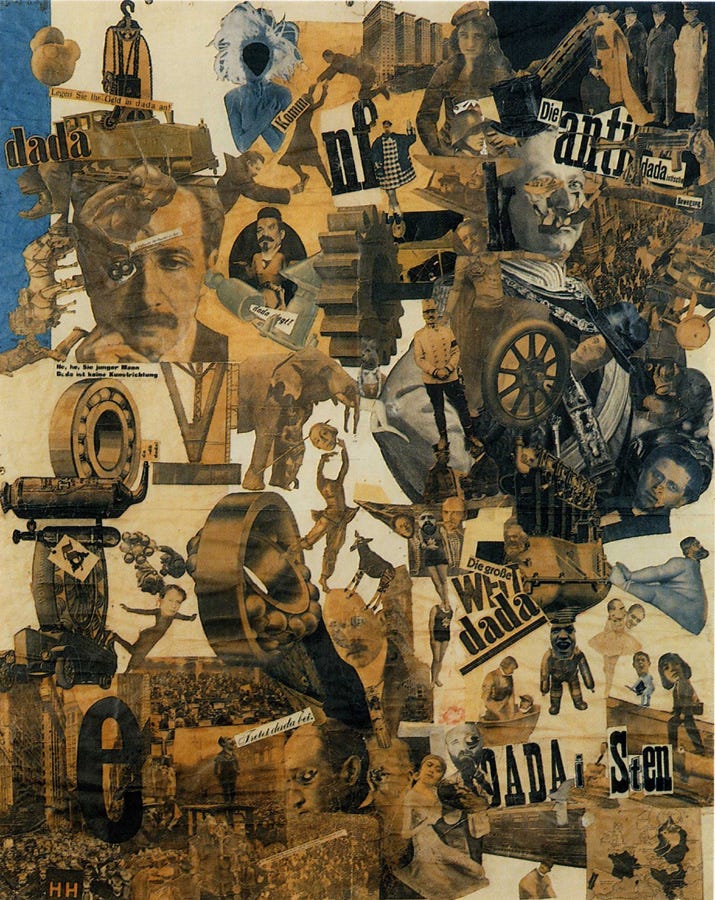
Cut with the Kitchen Knife Dada through the Beer-Belly of the Weimar Republic, 1919 Source

Researching
What does it feel like to be an otter in a river when a train shakes the earth as it rumbles over a bridge? Or a kestrel seeking prey over a landscape in which only tiny patches are available for use amidst humanscaped prey deserts? Fascinating research saw humans trained to understand, and as far as possible feel, in the umwelts of different animals around the River Tome in Somerset, England.
“The whole point was … to be in the world as if you had taken that imaginative leap into otterhood, and see what happened.”
And it’s really informative. And an overall conclusion:
“It was hard to feel how we’ve made the world a really hostile place for all these individual creatures. When that’s you, you really feel it. It was quite galvanising.”
Almost the end
Got to point to this stunning example of detachment of mainstream economics from reality/sense:
"With log utility it is optimal to take 1 in 3 chance of ending human existence for 2/3 chance of dramatically raising living standards by factor of 55."
Reported by the Financial Times, that’s from Stanford economist Chad Jones, who’s just been hired by Anthropic, which “likes to portray itself as the AI industry’s conscience”.
What did you think?
You can also find me on Bluesky, Instagram, Facebook, LinkedIn, TikTok and X.