
Change Everything No 75: Cooperation, conflict and recovery
Exploring symbiosis, revisiting the Great War of Africa, and hearing from the women of the Chicago World Fair. Plus beautiful sea slugs

© Natalie Bennett (Gel plate print)
Picks of the week
Due to the urgent need to return a pile of overdue library books, this is a all-reading picks special.
Symbiosis: living in a cooperative world
Sophie Pavelle’s To Have and To Hold: Nature’s Hidden Relationships, fits in a familiar genre, an author travels widely, and frequently chaotically, telling us in detail about many steps on the way to their discovery of knowledge on a particular, often lesser-known area of research, including painting colourful word-pictures of the people they meet. But it was the actual science, not just of symbioisis, the putative main subject of the book, but more the relationships between organisms - often times parasitic (“over half of all species today exist in some form of parasitic relationship” - p. 74), sometimes wholly cooperative, but often some mix of the two, that really grabbed me. (A wildlife fan’s review.)
As you’d expect, Pavelle starts with that under-celebrated 20th-century giant figure Lynn Margulis, and her 1967 paper “On the Origin of Mitosing Cells,” which “rattled the hallowed corridors of science, leaving bemused (still mostly male) academics floundering in her choppy wake. Before it was accepted and published, the Journal of Theoretical Biology rejected her paper 15 times…. Until this point the accepted route to life on Earth was founded on the elements of chance and competition, on mutations and natural selection…. Because Charles Darwin said so… Lynn read this rulebook, nodded in agreement, and then obliterated it…. Lynn credited naturalists - not mathematicians, not physicists - for delivering a significant public service in raising awareness of the abundance of life on this planet.” (pp. 21-23)
With the animals, Pavelle starts with Convuluta roscoffensis and Convuluta paradoxa, more easily remembered as the “plant-animal worm”, also known as the mint-sauce worm. And with the 1910 text A Study in Symbiosis by biologist Frederick Keeble (also handily available online), which is - I found through the wonders of the London Library - just as fascinating a little read as this author says. As Pavelle puts it:
“Together as one, plant and animal become a garden, absorbing sunlight and carbon, creating rivers of sugars and starch to compensate for this worm’s curious inability to feed itself. Through this process, the algae become what science calls ‘photosymbionts’… When the tide arrives, the worm cities make a phenomenal collective vertical descent from shallow tidal pools into the safety of the sand. When the tide departs, their return journey begins - the worms ascend back to the salty pools and puddles on the tide line with one thing on their many mini minds: LIGHT.” (p. 33)
Of course, it is impossible to write a nature book these days without dealing with the impact of the climate emergence. Here one of the approaches is through the lens of microbiome disruption in crustaceans.
“Shell disease, also known as black spot, rust spot, box burnt disease and tail fan necrosis, in decapod crustaceans… in severe cases it can lead to ‘dysbiosis’, a fundamental breakdown of the bacterial communities that live together in the shell cuticle… Rising temperatures can trigger an evacuation or death of important microbes, which leaves behind a diseased, weak animal in a shrinking shell.” (p. 108)
Yet there’s one species - unsurprisingly an increasingly successful invasive species - that is pretty well immune, shore crabs, Carcinus maenas.
“Although native to European shorelines, and a vital food source during historical episodes of human famine, shore crabs have wreaked havoc on the eastern US coastline, where they are considered among the worst invasive pests in history. They’re causing trouble on Pacific coasts from California to Canada and are even trying to claw their way into South Africa and Australia… thought shore crabs hitched a lift across the Atlantic on European merchant shops in the 1800s, staking their claim on anything that moved when they landed: seagrass, juvenile king crabs, larval salmon.” (p. 109)
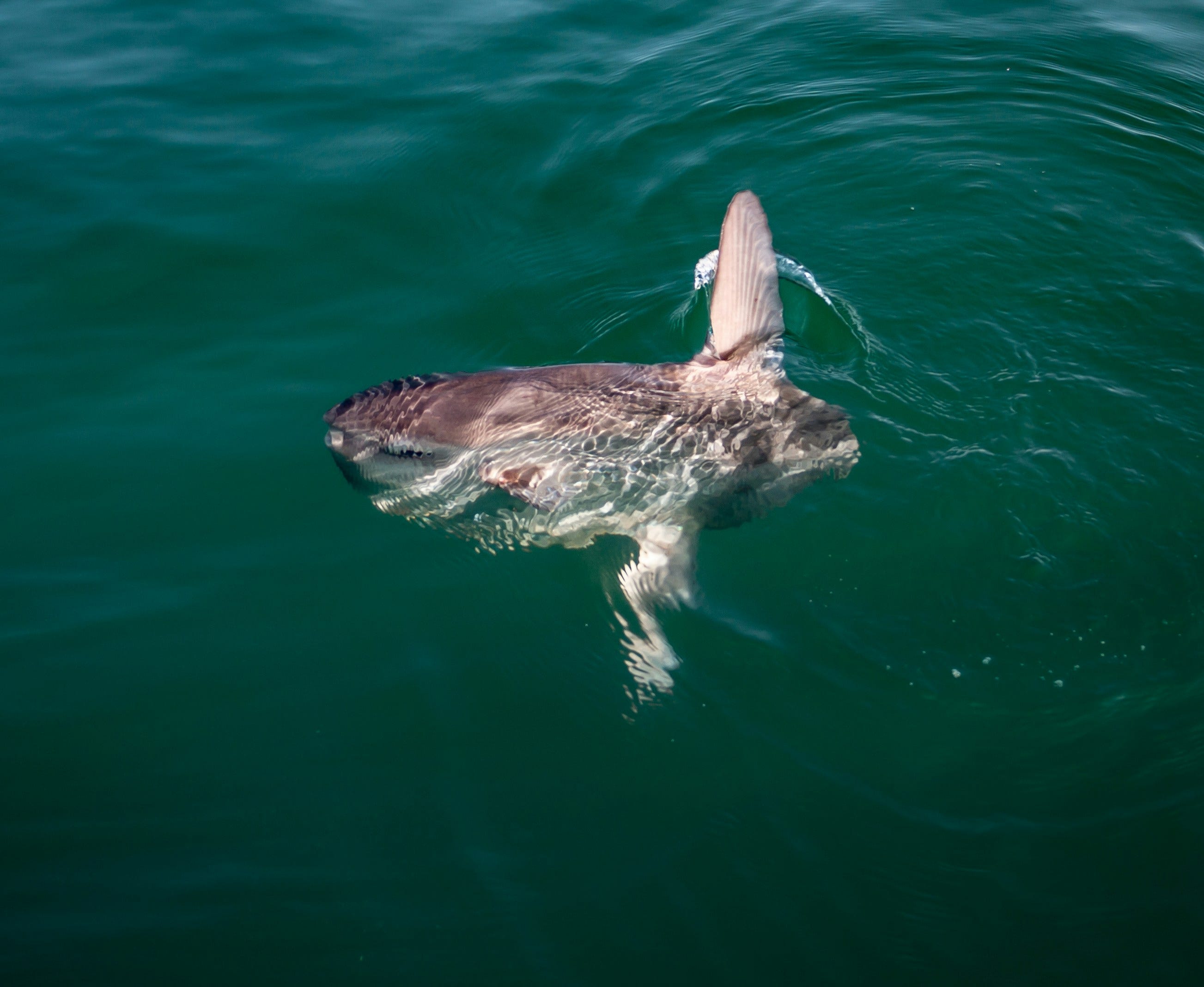
Photo by Ray Harrington on Unsplash
Yet parasites, or should that be symbiotes, might be helping sunfish (one pictured above - a species that carries an almost unbelievable level of what we have called parasites) survive the ever-rising levels of pollution we are inflicting on this planet.
“Studies on non-sunfish cestodes (tapeworms) show an unbelievable tolerance of industrial cadmium and lead, with bodily concentrations measuring well over 1,000 times greater than their host’s tissues. Similar results were seen for ingestion of polychhlorinated biphenyls (PCBS). Other studies measured a reduction in arsenic conscentration and associated oxidative stress in host tissues, when infected with certain cestode parasites. The same results have been spotted across freshwater fish species and in terretrial habitats. Parasites cycle metals through their body, lowering the overall toxic burden for their hosts. (p. 93)
And the “messiness”, the complexity of biology, only grows with our understanding. Pavelle gets very into hairworms. (Warning, if you didn’t sleep after watching The Last of Us, you probably shouldn’t read the next bit.) Gordius aquaticus are manipulative parasites that take over the behaviour of a cricket, which has eaten an intermediate host in which it has formed a cyst (eg a very small aquatic snail), then “forcing” the cricket to jump into water (while also keeping it atypically silent to reduce the risk of predation), where the adult hairworm will escape by forcing its way out of the cricket’s body, to - it hopes - find a sexual partner, with their eggs deposited in fresh water to run around the cycle again. But they may be an important part of the ecosystem:
“If you removed hairworms, apart from removing the biomass of the adults, you’re also removing millions of eggs and larvae from the watercourse. Millions of eggs are laid but few of these make it to adulthood - the rest become food for other organisms. Without nematomorphs you also wouldn’t have as many insects entering rivers and streams - who become vital food for so many other species. There would be a significant impact on the river ecosystem… 2012 paper by Sato and colleagues…found hairworm-infected insects in Japanese streams were more favoured prey than insects without hairworms inside them. The usual aquatic prey, spared from hairworm incursion, increased in abundance. There was even a slight increase in freshwater nutrient cycling.” (p. 199)
Yes, nature is messy. We really can’t let reductive thinking continue to dominate, as it so often does, our ideas about it.
Congo: after the Rwandan genocide, the war
I first got interested in the Democratic Republic of Congo when - from the foreign desk on the Bangkok Post - I covered the fall of Mobutu Sese Seko. I particularly remember the image of him - a battered, creased black and white hard-copy photo in the classic leopard-skin hat from 1965 - that for months was the only one we had, which we ended up using almost daily. (A reminder of how scarce information was about much of the world in those days.)
That interest led me to increasing knowledge about the levels of violence against women and girls, and sexual violence generally, associated with the continuing conflicts since, something I tried to focus on whenever I could while editor of the Guardian Weekly, including speaking to Chris Dolan, then director of the Refugee Law project.
I’m going to in the coming month be looking back further into the troubled nation’s history, to the time when the US was behind the barbaric assassination of democratically elected president Patrice Lumumba. In preparation, I’ve been revisiting the time I remember, with Jason K Stearn’s Dancing in the Glory of Monsters: The Collapse of the Congo and the Great War of Africa, a well-research and richly informed popular history covering (chiefly) the conflict from 1996-2003, which claimed some 5 million lives, the majority from hunger and disease. Stearn explains:
“One of the main goals of this book is to tackle ‘Congo reductionism’ - the tendency to reduce the conflict to a Kabuki theatre of savage warlords, greedly businessman , and innocent victims. To some, the war can be reduced to Rwandan meddling, to others to Western greed for raw minerals…. More recently, there has been a push by advocates to see the conflict through the sole prism of sexual violence and conflict minerals. The Congolese conflict does not fit well in these straitjackets. I do not have Unified Theory of the Congo War, because it does not exist. The conflict is complex and knotted, with dozens of different protagonists. The long history of state decay in the Congo - or more accurately, the failure to ever build strong instutuions - has meant that actors have proliferated , competing for power and resources in the absence of a strong government. At the height of the war, there were upwards of forty Congolese armed groups in eastern Congo alone, while nine different African states deployed troops… American and, in some cases, European policy has been sadly shortsighted on many occasions, in particuular in its sympathy for Rwandan interference in the Congo in the name of self-defence. Overall, however, the greatest sins of Western government have been ones of omission and ignorance, not of direct exploitation. We simply have not cared enough about a crisis that is too complex - and too marginal to geopolitics - to fit into a sound bite. This has led at times to one-dimensional policymaking and the search for simple heroes and villans when the roles are much more complex than that.” (pp. xvi-xviii)
The Rwandan genocide of course is the background, and the colonial origins of that:
“The first German governor of Rwanda, Count von Goetzen, theorized ‘the Tutsis are Hamitic pastoralists from Ethiopia, who have subjugated a tribe of Negro Bantus,’ while Catholic prelate Monsignor Le Roy put it different: “Their intelligence and delicate appearance, their love of money, their capacity to adapt to any situation seem to indicate a Semitic origin.” Armed with rulers and measuring tape, craniometric Belgian administrators went about rigidifying with physical measurements the previously more fluid boundaries between Tutsi and Hutu identities. These colonial fantasies soon became engraved on the consciousness of the colonized, as well. The Tutsi elite … seized on the myths to justified their continued superiority… Hutu dissidents, in the meantime, appropriated the stereotypes of Tutsis as a race of crafty herders from Ethopia to rally support against ‘the foreigners’.” (pp. 23-4)
Then the reality of Rwanda 1994:
“The new rulers of the country drearily inspected the shell-pocked government buildings. In the ministrty of justice, filing cabinets floated ina sea of sewage and documents. … Not a cent was left in the Central Bank … An estimated 114,000 children had been orphaned by the genocide and needed looking after; 150,000 houses had been destroyed… grim backdrop to preparations for the RPF’s invasion of the Congo. It was the starting point for everything that followed… On the radio in the west of the country, on the border with Congo, one could hear the government in exile broadcasting from the refugee camps, claiming to be Rwanda’s legitimate government. For the survivors of the genocide, many of whom had lost members of their families, the genocidaires’ presence in the camps was a living insult.” (p. 46-7)
But by mid-1996:
“Museveni and Kagame had stitched together an improessive alliance of African government behind their drive to overthrow Mobutu. This was a regional conflict, pitting a new generation of young, visionary African leaders against Mobutu Ses Seko, the continent’s dinosaur. Never had so many African countries united militarily behind one cause, leading some to dub the war Africa’s World War. Unlike that war, however… the battles were short and the numbers of soldiers killed in the thousands, figures dwarfed by the number of civilians killed… What seems obvious in hindsight - that Mobutu’s army had been reduced to a mockery of itself, that Mobutu’s hold on power had crumbled - was a vague hypothesis in RPF briefings of the time. … The Rwandan-backed invasion was perhaps the heyday of the African Renaissance, riding on the groundswell of the liberation of South Africa from apartheid, and of Eritrea, Ethiopia and Rwanda from dictatorships…. a proud moment in African history, when Africans were doing it for themselves in the face of prevarication from the west and United Nations.” (p. 55)
But the genocide - and the prejudices behind it - cast a long shadow.
“The ethnic stereotypes and conflict that were born in Rwanda have contaminated the rest of the region. … Again and again, in the various waves of conflict in the Congo, the Tutsi community has taken center stage, as civtims and killers. This antagonism is fueled by struggles over land tenure, citizenship and access to resources, but also and most directly by popular prejudice and a vicious cycle of revenge…. Whereas previously anti-Tutsi resentment was a phenomenon limited to small areas of North and South Kivu, it has now spread across the region.” (p. 79)
And there was a long history between Rwanda and DRC. In the 1930s tens of thousands of Rwandans were imported by the Belgian colonists as agricultural labourers to the Kivu highlands, mostly Hutu but also Tutsi. Later,
“Unrest in Rwanda around its independence prompted a further 100,000 Rwandans to flee to the Congo between 1959 and 1964. They were settled initially by the United Nations but eventually integrated into local communities… included many educated and affluent Tutsis who came to form an important part of the Goma elite. The 1970 census found 335,000 Rwandans living in the Congo, mostly in the territory of Masisi, where they made up over 70% of the population. By 1990, an estimated half a million descendants of Rwandan immigrants were living in North Kivu.” (p. 70-71)
Is one of the unnamed problems here the assumption, the pressure, to tie ethnicity and nationalism together, to deny the realities of always complex histories of human movement and mixing, seeking simplification on the basis of identities as ideology.
Women’s voices from 1893, diverse and often radical
So many women - and women-linked activities - were celebrated in their own time, and then just seem to disappear from (certainly mainstream) historical memory. Uncovering one truly international set of voices is a single slim volume of essays, Global Voices from the Women’s Library at the World’s Columbian Exposition: Feminisms, Transnationalism and the Archive, edited by Marija Dalbello and Sarah Wadsworth.


The event to which it refers is better known as the 1893 Chicago World’s Fair. It had a “Woman’s Building”, the result of collective efforts from women’s groups in 24 countries. Thinking about the cost and slowness of international communications then, that was quite an effort.
The library had more than 8,200 titles from 23 of those, nearly half from elsewhere than the US. At an important time of change. As the editors summarise:
The end of the nineteenth century, a historical moment that coincided with the height of optimism in industrialism, was characterized by shifting ideas around gender and the changing roles of women in society. Modernism and globalism in the context of international women’s culture and activism overlapped with calls for class justice and social reform. The strands revealed through analyses of what was represented in the Library show a progressive orientation. Our analyses uncovered different and distinct versions of feminism within a broader discourse of conflicting ideologies. Some versions were based on conformist nineteenth-century values of domesticity and philanthropy, while others were rooted in more radical gender ideologies and reformist movements. Yet they all valued women’s emancipation and translated this shared value into pragmatic concerns that varied with the local settings. (p.3)
Among those appearing - and one who unusually has been recovered by modern historiography, at least in her own country, is the Turkish novelist and writer Fatma Aliye. A quick survey of the ebbs and flows of her fame is illustrative.
The official nation-building narrative of the Turkish Republic, which portrayed the republican regime as the emancipator of women oppressed by the Ottoman state, caused Aliye and Ottoman women’s movements to fade into oblivion in the history and collective memory of the society. Aliye’s works received little or no attention in Turkey until the 1980s and 1990s, when (Islamic) feminist research rediscovered her oeuvre. Further attention has been paid to Aliye since the 2000s. In the last two decades, some of her books, like The Lute Player (1898), Scenes from Life (1898), Mercy (1896), and Enin (1910, Lamentation) have been transliterated from the Ottoman Turkish to the Latin alphabet. Today, Aliye is the only woman featured on Turkish currency, among six notable historical figures to be so honored. (pp. 182-3)
France, slightly curiously, contributed 885 titles in 1031 volumes, well ahead of Great Britain’s 500, all proposed by the Comité des dames (the Committee of French Ladies), with the nation’s President’s wife as its leader and the then prominent, although little documented, feminist Marie Pégard (1850–1916). There was an awful lot going on, in both France and Chicago, as this little extract demonstrates:
One writer, Maria Martin (1839–1910), an English-born French feminist, socialist, pacifist and freemason, advocated equal rights for women. Le Journal des femmes (“The Women’s Journal”), which she founded in 1891, paid great attention to the preparation of the Chicago Woman’s Building, outlining the program of the women’s meetings to take place there. Unable to take part in the “Women’s Parliament” (i.e., the World’s Congress on Woman’s Progress), which was held in Chicago during the Fair, Martin lists the questions to be debated there: “the worker’s salary, educational facilities for young girls, the rights of married women and mothers, up to the poor scorned prisoner”. Education in France was indeed very unequal at the end of the nineteenth century: young girls were not authorized to access secondary education until the end of 1881, and then only in single-sex establishments; in higher education in 1900 only 3.3 percent of the students were women. (pp.228-229)
There were plenty of fairly, and very, obvious names in the British offering: Jane Austen, Maria Edgeworth, George Eliot, Elizabeth Gaskell, Ann Radcliffe, Mary Shelley, and Acton, Currer, and Ellis Bell. But one of the more inventive chapters in the book, by Jackielee Derks, focuses particularly on the appearance of the Indian subcontinent in the British books. It finds 25 novels that “reference Indian goods at least once”.
Images of objects imported from India, such as gowns, handkerchiefs, rugs, lace, and cuts of muslin, silk, and calico are scattered throughout their pages. … Among the British titles, however, one stands out: Krupabai Satthianadhan’s (1862–1896) Saguna (1892): the only novel included in the Woman’s Building Library that was written by an Indian woman. As such, Saguna subverts Western attempts to define the colonial space. Like many of the books included in the Library, Saguna, which was first serialized in The Christian College Magazine and later published by Srinivasa, Varadachari & Company of Madras, has since fallen into obscurity. At the time of the novel’s publication, however, it received wide acclaim in both India and England. Amid the many reviews included in the second edition (1895), Queen Victoria is quoted praising the novel for “showing the native ‘new woman’ beside the old”. Indeed, Satthianadhan appropriates British literary forms to assert her voice and frame the Indian New Woman. … I argue, Satthianadhan does not just replicate Western forms; rather, she evokes and transforms a British mode of female agency through a process of transculturation. The result is a unique mode of female subjectivity that shows how the New Woman concept developed through cultural exchange.” (p. 197)
(This recently published book has more about her.)
From Norway, there’s a demonstration of how to make even the mainstream, “acceptable” face of women’s writing subversive:
“Second largest category in the collection included materials about the domestic arts of sewing, food preparation, gardening, medicinal plants, and handicrafts. Practical works connected to traditional views on women as keepers of children and home included C. Halvorsen’s Linsömbog, Veiledning i Klipning og Syning af Undertöi (“Guide to Cutting and Sewing Underwear”), and three books by Jonine Frølich: Endel Norske Vildtvoxende Medicinske Planter, Pl. II (“A Few Wild-Growing Norwegian Medicinal Plants”). … feminist themes appear subversively within the works. For example, Hanna Wisnes (1789–1872), author of Lærebog i de förstkjellige [sic] Grene af Husholdningen (“Guide to the Various Branches of Housekeeping” 1845) wanted to simplify life for Norwegian women. Unlike popular, French-inspired cookbooks available at the time with difficult instructions and hard-to-source ingredients, Wisnes’ hands-on book included easy-to-follow recipes using local ingredients. Her audience was working-class housewives and Wisnes instructed them how to run a household like a self-sufficient business. She emphasized fiscal responsibility, while offering practical guidelines on gardening, butchering, and beer-brewing. And Olaug Løken (1854–1925) was a cookbook author, feminist, and member of Norges Husmorforbund (“the Norwegian Housewife Association”)… This group had an important but short-lived goal of professionalizing women’s work by creating home economics classes and professional training for housewives, and building relationships between domestic workers and those who hired them. Twenty-four books (15 percent) related to the domestic arts were included. (p. 164)
A seemingly highly specialised subject yields fascinating, multinational insight into late 19th-century women’s lives.
Almost the end
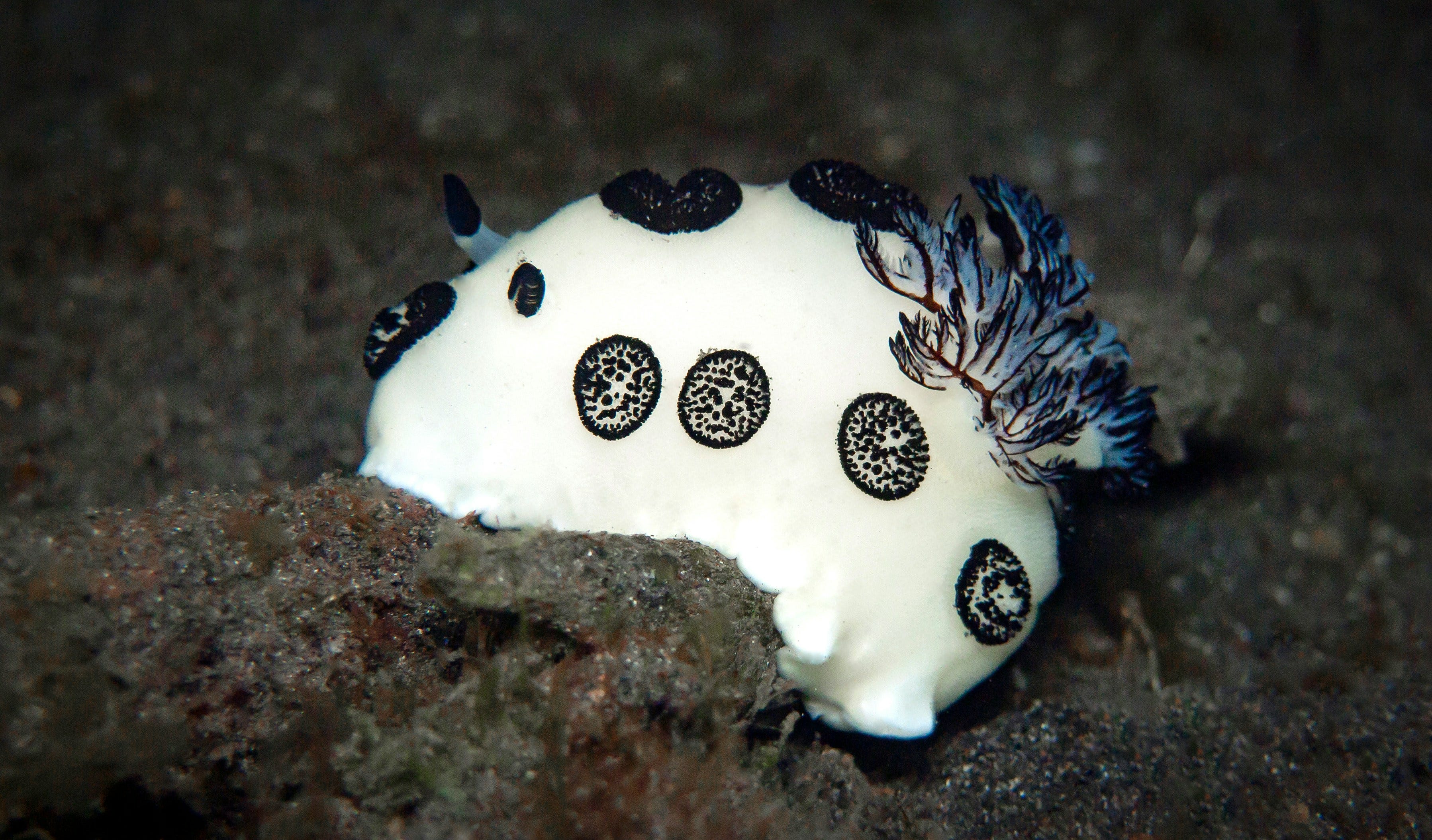
Photo by Heidi Bruce on Unsplash
So, if you’ve got a long journey coming up when you won’t be able to read, what would I recommend listening too? Well you might be tempted to skip the Snails and slugs episode of the Common Descent podcast. How interesting can they be?
Don’t. They are absolutely fascinating - and sometimes beautiful (see particularly some of the sea slugs, as above and below). And deadly - cone snails, which “harpoon” their prey then inject a potent blend of neurotoxins that can instant kill a small fish, and do pretty serious damage to a human. (Sorry, more nature nightmares!) And if developmental biology is your thing, the whole story of torsion is absolutely fascinating. Many species are, inevitably, threatened with extinction, mostly through habitat loss, but sometimes by collectors. But there’s little doubt gastropods will collectively hold on - they’re found across the broadest altitude range of any group, from 10km deep in the ocean to almost the top of the highest mountains.
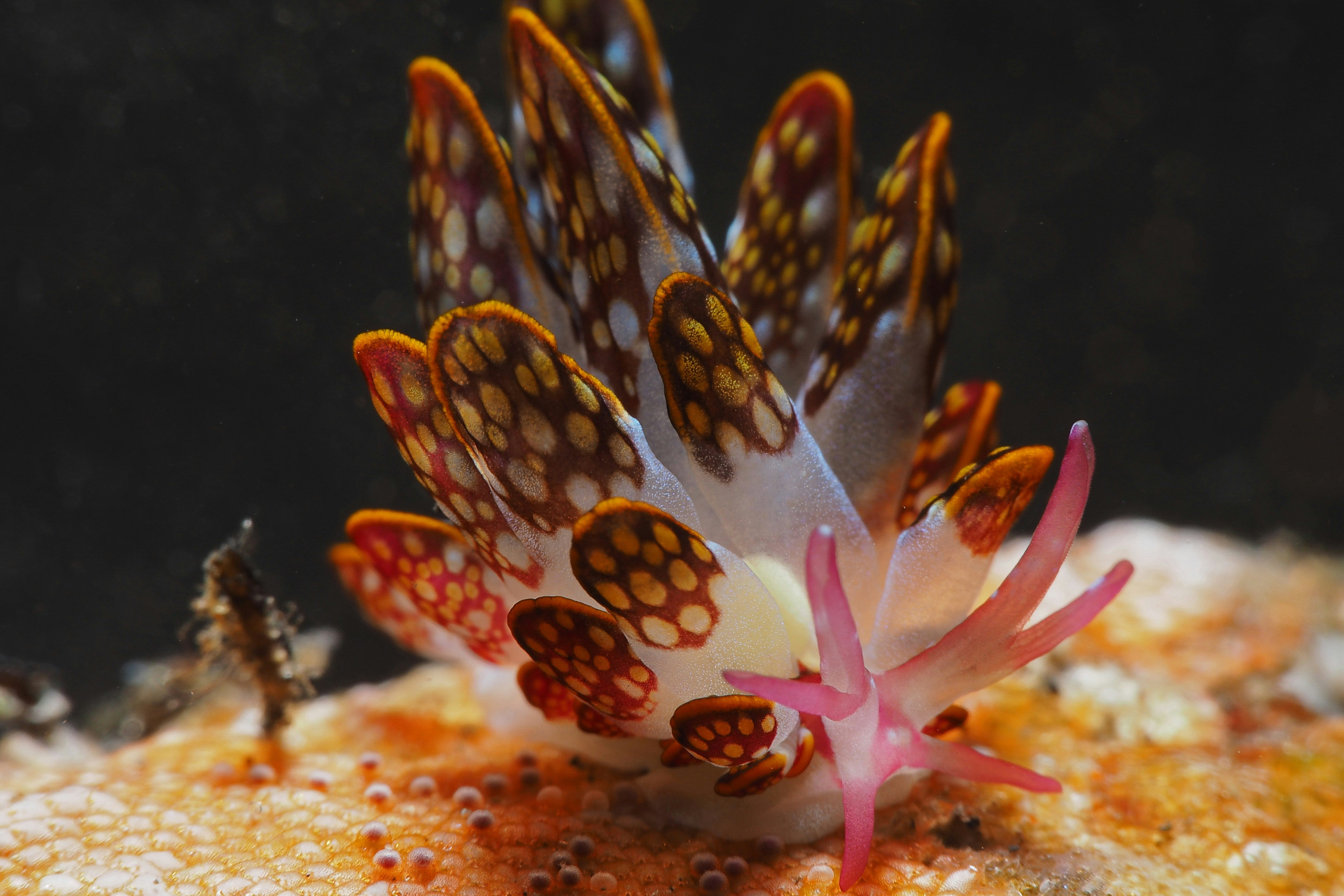
Photo by Pascal van de Vendel on Unsplash
What did you think?
You can also find me on Bluesky, Instagram, Facebook, LinkedIn, TikTok and X.