
Change Everything No 57: Slow Down or Die - a French perspective on degrowth
It's a zero-sum game: growth in GDP usually means loss in social and natural wealth. We can't afford to continue this way

Book news
A reminder that on October 1 I’ll be in Portsmouth talking Change Everything. And if Worcestershire is your patch, keep an eye on the Malvern Book Cooperative website for an announcement coming soon.

Degrowth, a perspective from the originators
Degrowth, or post-growth, whichever you call it, is the philosophy calling for “a steady-state economy in harmony with nature, where decisions are made collectively, and where wealth is equitably shared, to enable properity without growth… an economy of better”.
That definition comes from one of its most high-profile proponents - and very lively speaker on the subject (I heard him at the Beyond Growth conference in the European parliament in 2023) - Timothée Parrique, whose most-recent text, originally in French, has been published this year in English as Slow Down or Die: The Economics of Degrowth (p. 209). It’s right that we should be starting talking about postgrowth (my preferred term) with a French perspective, for as Parrique outlines, while objecting to economic growth on this finite, fragile planet can be traced back to the 1960s, the term decroissance itself can be dated back in France, then across Europe, and also, for obvious linguistic reasons, in Quebec.
“In 1979, French philosopher Jacques Grinewald and Belgian-Swiss jurist and historian Ivo Rens translated four essays by Nicholas Georgescu-Roegen and published them in a collection titled Demain la descroissance, or “Tomorrow, Degrowth” (the title was chosen in response to Demaine le capitalisme… a book now associated with neoliberalism, publiched the year before by economist Henri Lepage…. After two decades in gestation, … In February 2022, the activist environmentalis magazine Silence published a special issue titled ‘Decroissance soutenable er conviviale, (Sustainable and Inclusive Degrowth)” an issue that gained attention thanks to the publication that same month of an article by Herve Kempfe in Le Monde.” (p. 143-44)
There is a long history of related thinking. Parrique points us to the work of Serge Latouche, author of Les Precurseurs de la Decroissance, which covers a range from Francoise d’Eaubonne’s ecofeminism to Murray Bookchin’s libertarian muncipalism, Ivan Illich’s tools for convivialty to Cornelius Castoriadis’s radical autonomy.) (p. 137) But it is in this century that the overall approach has come together.
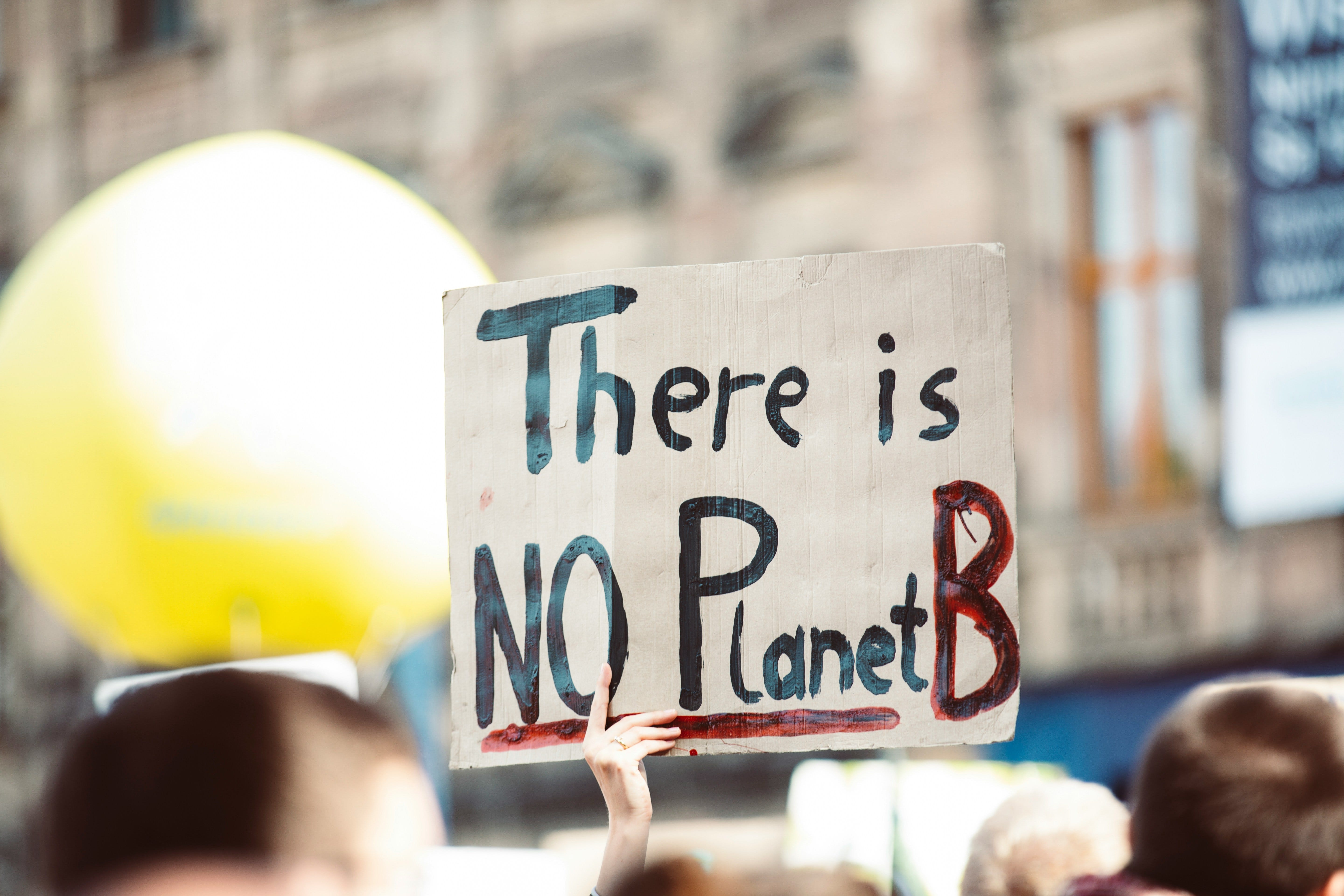
Photo by Markus Spiske on Unsplash
We don’t really need more explanations of why GDP is a terrible measure of national wellbeing, and one deeply implicated in the disastrous financialisation of our societies. At least those of us who “get it” don’t. Mainstream politics (and political reporting) is still deeply embedded in the “football score-style” counting of up or down this quarter. But Parrique does it well:
“It is in the choice to include or exclude certain activities within the measurement framework that today’s vision of the economy takes shape. Here is the definition the national accounting system gives for activities admitted into the economy’s perimeter: ‘an activity, carried out under the responsibility, control and management of an institutional unit, that uses inputs of labor, capital and goods and services to produce outputs of goods and services.’ That includes marketable and monetizable activities, along with certain non-market activities whose monetary value is easy to gauge…. We talk about Gross Domestic Product and not Net Domestic Product because the former does not take into account the ‘depreciation of capital,’ in other words, the loss of value of certain production factors like the deterioration of roads, the electrical grid, or buildings. If we include only machinery and infrastructure in capital, the difference between GDP and NDP is negligible. However, if we broaden the concept of capital to include nature (the depreciation of natural capital) and even the health and wellbeing of workers (the depreciation of labor), GDP growth may be offset by the degradation of ecosystems and individuals it has caused.” (p. 26-7)
Parrique starts by quoting Simon Kuznets, the creator of the measure of Gross National Product, who told the US Congress in 1934:
“The welfare of a nation can scarcely be inferred from a measure of national income… distinctions much be kept in mind between quantity and quality of growth, between its costs and return, and between the short and the long term. Goals for more growth should specify more growth of what and for what”. (p. 28)
Questioning GDP as a target is now relatively common, if not mainstream, but challenge the great God of “productivity”, as I do in the House of Lords, and you appear to have breached a boundary like denying the existence of God in the face of the Spanish Inquisition . Yet Parrique explains how conventional thinking fails to account for the fact that all production is enmeshed in a social infrastructure.
“In the same way that trees in a forest absorb carbon and help regulate the climate (an ecosystem service), friends who comfort us after a tough day at work render a socio-system service, as they absorb distress and help regulate our emotions. In both cases these services are emergent properties,
Not counting human and more-then-human factors leaders us hugely astray.
“Technical progress is … illusory if the increase in a (market) factor’s productivity is achieved at the expense of another (non-market) factor’s productivity. The advent of fertilizers, pesticides and herbicides temporarily increased the yield from agricultural labor, but at the cost of losing biodiversity, soil fertility, and of putting workers’ health at risk. The surplus in monetary production came with a decline in ecological and social production…. If we take all factors into account, we ultimately notice a loss in productivity and a technical setback… To grow your tomatoes with less water, clean your house more quickly, or organize a walking bus to bring kids to school are economic innovations in an anthropological sense, because they facilitate the production of goods and services that contribute to the satisfaction of needs. Yet these are not the kinds of innovations that economists study… The ‘technical progress’ of economists only takes monetary value into account, thereby creating the quantifiable illusion of enrichment. Often, however, this improved productivity only reflects the transformation of social and/or ecological wealth into financial wealth.” (p. 40-41)
And this is the only kind of wealth most of our present-day politicians are interested in promoting or even understanding. There is the justification of the financialisation of everything, at great, in Parrique’s terms, anthropological (human) cost.
The above is quite technical, but Parrique becomes very easily clear when it comes to the outcome for politics.
“Economism is the vision of the world that applies the frameworks of contemporary economic analysis - neoclassical, capitalist and neoliberal - to real life… every human activity is subjected to a cost-benefit analysis. The economy has become the subconscious of our modern societies. Every problem, be it social, cultural, political or ecological is subordinated to the will of the market… imposes a ‘tyranny of monetary value’, ‘disdain for everything that is not money’. [Phrases from Frederic Lordon]… The habitus of growth becomes common sense in a society where everyone wears capitalist lenses and where the principle of profitability is institutionalized as an ethic…. Practicing voluntary simplicity in an economy organized around growth is as difficult as playing Grand Theft Auto without committing a crime…. Psychologist Harald Welzer decribes economic growth as ‘the mental infrastructure’ of our modern societies.” (p. 46-47)
I would add that we see this too in our studies of non-human animals. David Graeber, drawing on Kropotkin, pointed out the difficulty our science has in accounting for animal play. But what is it for is something the behaviourists puzzle over? “For fun, for pleasure” is something they struggle to account for, just as in human society.
And yes, there are still people who believe in green growth, which demands the decoupling of planetary destruction from GDP growth. (I had to fight off being linked to the term only last month.) Parrrique demolishes that too:
Green growth, in the sense of sustainable development, would consist in an increase in production accompanied by a decline in the economy’s total ecological burden. It would be growth backed by a total decoupling, one that is absolute, from the bottom, global and permanent. And of couse, the reduction of the ecological burden should be rapid enough to avoid exceeding planetary boundaries”. Yet such green growth has, to this day, never existed.” (52)
Parrique offers some handy stats too on the need to count consumption emmissions (and other environmental impacts) rather than territorial. (Lots of the UK’s drop in carbon emissions comes from exporting manufacturing to other places. The Committee on Climate Change does - if not terribly loudly - point this out.) For today a quarter of global production is exported, so a third of greenhouse gas emissions and 41% of the global material footprint are linked to international trade. (p. 57) And as for the recycling myth, Parrique has a nice list and stat: “Fuels, incinerated biomas,, food, fodder and all disiipative materials (brake pads, fertilizers, pesticides, metals mixed into paint, microplastics etc) cannot be reused or recycled because they simply cannot be retrieved. For every 100 million metric tons of resources extracted globally each year, 37 billion are irretrievable.” (p. 72)
And he sets out why the circular economy is a necessary but far from sufficient foundation for a genuinely sustainable economy.
“In 2020, the global economy consumed 100.6Gt of natural resources: 50.8 Gt of minerals, 10.1 Gt of metals, 15.1 Gt of fossil fuels, and 24.6 Gt of biomass…. 37Gt end up as irretrievable waste because they are dispersed into the environment (eg burned oil and biomass, which are recycled over long periods of time). Another 31 Gt are integrated into products with long lifespans like buildings and cars, and 32.6Gt are thrown out. The majority of this waste (74%) is not recycled, leaving only 8.6Gt of materials that can be reused as raw materials the following year. Even if humanity consumed only the same quantity as the previous year, it would still need to extract between 92Gt (at the current recycling rate) and 68 Gt (assuming a 100% recycling rate) of new resources from nature.” (p. 75)
Parrique is good to on the degrading impact of the progressive financialisation (or as he says commodification) of life:
“Some might see Airbnb as a corruption of the hospitality found on CouchSurfing. Indeed, paying for something can radically change our experience of a service. We do not behave in the same way with a host who generously puts us up as we do with someone who does it for money. Commodification risks replacing insticts for sharing and reciprocity - based on trust and sympathy - with the cold, impersonal and calculated logic of market exchange.” (p. 100)
And, he points out, the costs are not just in relationships.
“Far more often than we might think, the economy is a zero-sum game. Growth in the tip of the economic iceberg (the part measured by GDP) can only happen at the cost of a decline of potential growth in the submerged part…. An apartment on Airbyb is an apartment that isn’t on CouchSurging… an article written for a paid subscription newspaper is one less article in a free encyclopedia. GDP growth is therefore an ‘opportunity cost’ in terms of non-economic development.” (p. 92)
Want to read more? There’s a Degrowth (open access) Journal, of which Parrique was a joint founder. And how mainstream is this? Well Parrique tells us that a February 2022 study showed that only 1% of experts working in Germany’s Federal Environmental Agency still believe in green growth. (p. 157) And yes, I’ve been part of the All-Party Parliamentary Group on Limits to Growth.
But what politically stands in the road? Parrique accurately identifies outdated (and ideological-founded) ideas that have followed us out of the 20th century.
“During the presentation of a Climate Plan by France’s Public Investment Bank in April 2022, its president, Nicolas Dufourq, rejected degrowth because ‘growth is in our DNA’. According to entrepreneur Bertrand Piccard, ‘human beings always want to have more,’ and for economist Xavier Timbeau, growth is the natural consequence of human behavior, ‘something people do on their own." But, as Parrique says “To think that we have always worshipped money and pursued its accumulation is to know little of human history… Anthropologists show that many societies, part and present, aspire for equilibrium rather than growth. This is nor surprising. Nothing in nature grows forever. … It is one of the most fundamental characteristics of living things: all growth has a beginning and an end.” (p. 229)
Taking on these ideas is one of the focuses of my next book: on that, more soon!
Picks of the week
Reading
I have to start this paragraph by mentioning the British Plant Gall Society is on Bluesky, and seeking more followers. And you’ll know why you should after reading this beautifully illustrated Country Life article on these structures created by wasps, mites, flies and aphids. It seeks to rescue them from the malevolent image Shakespeare and other writers have presented of them.
Galls generally don’t harm the plant on which they grow, and the ancient and medieval medics who used them to treat patients were on to something: oak galls for example, having ‘strong antioxidant capacity and anti-inflammatory effects and antibacterial, antifungal, antimalarial and antitumor activities … as well as the anti-ageing skin properties”. And a timely reminder of users of the iNaturalist app: its Gall Week, and aims to be a citizen science project collecting information about them.

My photo: leaf-edged galls, likely caused by a microscopic mite
Listening
The Royal United Services Institute (RUSI) - UK-based - Journal Radio might not be on your regular podcast circuit, but it is hard to stay away from security issues these days, and I found the interview with British Army officer Major Jon Armstrong about total defence and resistance networks, with a particular focus on current-day Ukraine, but also talking about WWII and Sweden’s longterm planning, really fascinating, thinking also about what happens to a resistance network when peace comes. It also strikes me that this total defence concept has potentially broader - civil defence - implications: whether this crisis is military, climate- or health-related, whatever the cause of a shock, building community networks that can flex to deal with it makes a lot of sense.
Thinking
Okay, cheating slightly by putting my day job in here, but the Guardian has just reported on the issue of school uniforms. That is the plastic school uniforms that we are forcing our young people to wear. That shed into the environment - and into young lungs and digestive systems - large quantities of fibres, the same fibres being found in human brains, testes and breast milk. That’s why coming up soon I’ll be pushing an amendment to the Children’s Wellbeing and Schools Bill calling for a ban on such fibres, accompanied by another amendment that I’m also supporting calling for a ban on PFAS in school uniforms. Yes - the forever chemicals saturate the clothing we’re forcing on the young. Yes, this is an environmental health issue. But also surely a public health one.
Researching
Genetics research now is not so much breaking through old certainties as blasting them into the stratosphere: in eukayrotes, where genetic material is contained in cell nuclei, genomes contain the complete library of information required to build and maintain an organism. That’s GCSE biology, if not primary school level. Except in the case of two species of fungi - and who knows what else? - chromosomes can not just be shared between nuclei across several cells, but shared in an irregular manner. It might be chance how they get back together to form a new fungi, but that seems unlikely: there’s very probably an unknown mechanism enabling them to fuse the complete genome from the mix. No, we really don’t understand genetics at all - which is a very powerful argument for not messing with it with gene editing when we understand so little.

What genetic mysteries might be hiding here?
Almost the end
I suspect you are going to be seeing this almost everywhere, but have to note the wonderful Mary Beard has started a classics-meet-modern-life podcast with the Guardian’s Charlotte Higgins called Instant Classics. The first episode is, of course, about which Roman emperor Trump most resembles. I won’t give away the punchline, although the Substack I wrote about Beard’s Roman Emperors’ book might give you a clue.
What did you think?
You can also find me on Bluesky, Instagram, Facebook, LinkedIn, TikTok and X.
I loved this one Natalie. Thank you. You educated me and made me laugh out loud. The Degrowth book sounds great. I shall keep an eye out for it :)